How to Get and Handle VIP Table Service at a Nightclub: The Complete Guide
Understanding VIP Table Service: What You’re Actually Paying For
Let’s cut past the Instagram glamour and talk about what VIP table service in a nightclub actually involves. You’re paying a premiumâtypically a minimum spend or flat feeâto reserve a specific table or area inside the club. That gets you a dedicated server (your bottle service attendant), priority entry (bypassing the general admission line), and a designated spot for your group to sit or stand throughout the night.
The core concept is straightforward: you’re renting real estate and convenience. The trade-off is significant cost versus guaranteed comfort and a clear social base of operations for the evening. You’re not just buying bottles; you’re buying logistics, status within the venue’s hierarchy, and the peace of mind that comes with not fighting for a spot near the bar.
Here’s the reality check: that shiny table doesn’t magically make the music better or guarantee you’ll meet anyone interesting. It solves two problems: waiting in line and losing your spot. If your group wants to spend the night dancing in the middle of the crowd, it’s often a waste of money. For a birthday celebration or a night where you want to guarantee a comfortable space for your crew to hang out between dancing, it makes practical sense.

Who Should Actually Get a VIP Table (And Who Should Skip It)
Best for VIP table service:
- Groups celebrating a milestone: Birthdays, bachelor/bachelorette parties, or reunion nights where having a home base matters.
- Larger groups (6+ people): Once you have more than five friends, the logistics of moving through a crowded club become a headache. A table solves this.
- People who hate lines: If standing in a general admission line for 30â60 minutes is unacceptable to you, VIP entry is worth the cost.
- Anyone who wants guaranteed seating: Some clubs have limited seating for general admission. If you want a place to sit and talk, you need a table.
- Events with high demand: Major DJs, holidays, or special events where general admission sells out or becomes prohibitively expensive.
Avoid VIP table service if:
- Your group is 2â4 people who want to dance the entire night: You won’t use the table, and the cost per person will be high.
- You’re on a strict budget: Even the cheapest minimum spends often start around $500. For a small group, that’s hard to justify.
- You don’t care about bottle brand or presentation: If you’re happy drinking well drinks from the bar, save your money.
- Your group can’t commit to arriving early: If everyone shows up at 1 AM, you’ve wasted the best hours of the table reservation.
How to Budget for VIP Table Service
Here’s where the sticker shock usually hits. The cost of a VIP table service nightclub package isn’t just the bottle priceâit’s the entire ecosystem of fees around it.
Typical cost breakdown:
- Minimum spend: This is the floor. You agree to spend at least $500â$2000+ depending on the club, night of the week, and location. On a Friday night at a tier-1 club in Las Vegas or Miami, that floor can be $2,500+. On a Tuesday at a mid-tier club in a secondary market, it might be $500.
- Bottle prices: These are marked up 300â500% from retail. A bottle of Grey Goose that costs $30 at the liquor store will run you $200â$500 at the club. Top-shelf or rare bottles can be $1,000+.
- Service charge/gratuity: Expect 18â25% added to the final bill. This is mandatory. Don’t confuse it with your tip to the server (more on that below).
- Tax: Applicable on the entire tab.
- Booking fee: Some clubs charge a non-refundable deposit to hold the table.
- Additional fees: Corkage fees for bringing your own (rare), mixers (juice, soda, Red Bull can be $10â$20 each), and water (often $5â$10 a bottle).
Practical tips to manage budget:
- Split costs evenly among the group before the night starts. A shared payment method can keep things simple and avoid awkward splitting issues later.
- Negotiate the minimum spend. On slow nights, clubs are often flexible.
- Ask about “bottle only” packages that skip mixers and extras.
- Watch for hidden fees like “service charge” that doesn’t go to the server.
- Consider a Thursday or Sunday nightâminimums can be 50â70% lower than Friday/Saturday.
How to Choose the Right Bottle Service Package
Not all VIP tables are created equal. You need to match the package to your group’s style and drinking preferences.
Common package types:
- Bottle-only: You pay for the bottle, and mixers are extra. This is the most common model. Great for groups that know what they like and don’t want extras forced on them.
- Bottle + mixers: Includes a set of mixers (soda, juice, Red Bull). Convenient but often overpriced if you don’t use them all.
- Table minimum vs. flat fee: Table minimum means you agree to spend that amount on bottles and food. Flat fee means you pay a set price regardless of consumption (typically on slower nights). Flat fee can be a bad deal if you don’t drink much.
- Premium packages: Include champagne towers, bottle presentations with sparklers, or VIP room access. These are pure spectacle and rarely worth the money unless you’re celebrating something huge.
How many bottles do you need?
- One bottle of spirits (like vodka or whiskey) typically serves 3â4 people for the night when mixed.
- For a group of 8 who plan to drink steadily, you want 2â3 bottles.
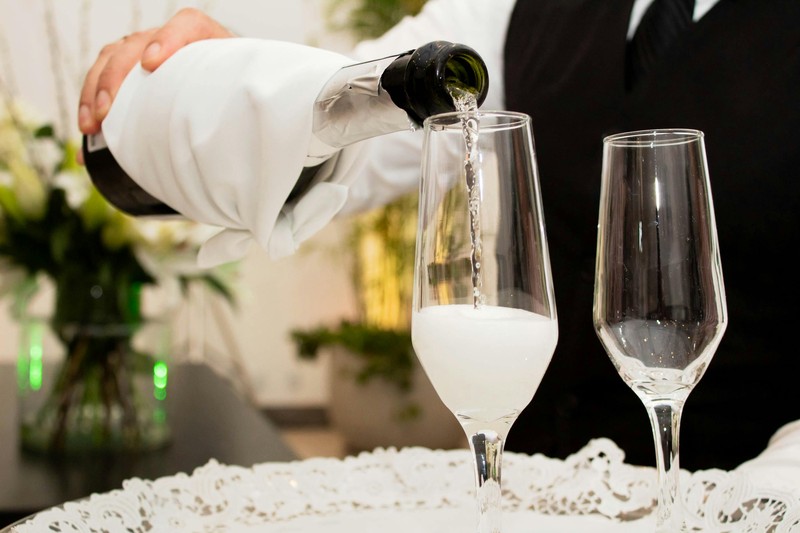
- Champagne is served in flutes and goes fasterâone bottle for 2â3 people.
Name brand vs. mid-shelf: The markup on top-shelf is brutal. If your group can’t tell the difference between Tito’s and Grey Goose, save $100â$200 per bottle and go with the lower tier. Nobody actually notices once the music is loud.
Booking VIP Table Service: Direct vs. Host vs. Promoter
This is where most people make their first mistake. There are three ways to book a VIP table, and each has distinct trade-offs.
Booking direct with the club:
- Pros: Reliable, clear pricing, no middleman drama. You know exactly what you’re getting and when.
- Cons: No room to negotiate. You pay the listed minimum. No perks or upgrades.
- Best for: First-timers, small groups, or anyone who just wants a clean transaction.
Using a club host:
- Pros: Can often negotiate a lower minimum or get you a better table location. They know the layout, the best servers, and the timing of when to arrive.
- Cons: Harder to find a reliable one. Some hosts are just promoters with a different title. You need to build a relationship.
- Best for: Regulars, large groups, or anyone planning multiple visits to the same club.
Working with a promoter:
- Pros: Sometimes get discounted minimums or bottle deals. Can get you on guest lists for free entry.
- Cons: Highest risk of bait-and-switch. Promoters are incentivized to fill tables, not to get you the best deal. They may promise a great table and then seat you near the bathroom.
- Best for: Getting into events that are sold out, or if you want guest list entry for general admission.
Cautionary advice: Always get written confirmation. An email or text message from the club’s booking department is gold. A verbal promise from a promoter 48 hours before the event is worthless. Ask for the table number, arrival time, and exact minimum spend in writing.
The 5 Most Common Mistakes People Make With VIP Tables
Having watched countless friends drop serious money on tables they regretted, here are the mistakes that burn people the most.
1. Not reading the fine print on table location
You can have a table in the main room with a view of the DJ or a table tucked behind a pillar near the service bar. The location defines the experience. Ask specifically: “Is this table in the main room, and is there a clear view of the dance floor?” If you don’t ask, you might be paying for a “VIP table” that’s basically a glorified hallway.
2. Underestimating the total cost
That $1,500 minimum spend you agreed to? Add 18â25% service charge and tax, and suddenly your final bill is $2,000. Then you need to tip the server $150â$300 on top. Do the math before you agree. Ask for a written breakdown of all fees.
3. Booking the wrong night of the week
Tuesday at a local club is dead. You’ll be the only people in the VIP section, which feels awkward. Friday and Saturday have the highest minimums but also the best energy. If your goal is just to have fun, a busy Saturday is worth the premium. If you’re just trying to check a box, Thursday can work, but don’t expect a party.
4. Bringing too many or too few people
Too few people and you’re sitting at a massive table for 8 with two bottles, looking lonely. Too many and you’re over capacity, standing awkwardly in the aisle, and the club may enforce capacity limits. Know exactly how many people are coming (confirmed RSVPs, not maybes) and book a table sized for that number.
5. Not confirming arrival time
VIP table reservations are not dinner reservations. If you show up an hour late, your table might get released to someone else. Most clubs hold the table for 30â60 minutes past the agreed arrival time. Confirm with the club the day of the event and arrive early. Being there 15â20 minutes before the agreed time is ideal.
What You Actually Need to Bring (And What to Leave at Home)
This is the pre-party checklist that saves you from bouncer drama and lost items.
Bring:
- Valid ID: Physical government-issued ID. No photos. No copies. Most clubs don’t accept international driving permits or foreign IDs without a passport. Bring a backup if you can.
- Comfortable shoes: You’re going to be standing most of the night, and VIP tables don’t have recliners. Leave the stilettos that hurt after 20 minutes at home. Look for comfortable dress shoes designed for all-night wear.
- Small bag or crossbody: You need your phone, credit card, ID, and cash. A small crossbody bag that stays secure and doesn’t hit people as you dance is ideal. It also keeps your hands free for drinks.
- Portable charger: Your phone battery will die. Between coordinating with the group, taking photos, and checking in with the server, you’ll be on your phone all night. A small battery bank saves the night. A compact portable charger that fits in a clutch is a lifesaver.
- Cash for tips: Your server and the host work for tips. Having $50â$100 in small bills makes it easy to tip early for good service. Card tips take forever to process and often get pooled.
Leave at home:
- Backpacks: Most clubs don’t allow them, and if they do, they go straight to coat check. It’s a hassle.
- Professional cameras: Unless you’re on a list or have explicit permission, don’t bring a DSLR. They’ll pull you aside and hold it at guest services.
- Outside drinks or food: Security will check. Don’t try to sneak in liquor or food.
- Expensive jewelry you’re not comfortable losing: Crowded clubs are where things get knocked off or disappear. Leave the heirloom pieces at home.
Arrival, Entry, and Table Etiquette
Here’s a step-by-step of what actually happens from the moment you pull up.
Arrival
Go to the VIP entrance, not the main line. This is usually a separate door with a host or security guard at a podium. Tell them your name or the name of the booking. They’ll check you off a list. Tip the host $20 on entry if you canâit sets a positive tone.
Being escorted
A host will walk you to your table. Don’t wander off expecting to find it on your ownâthe club’s layout is confusing even for regulars. When you sit, immediately identify your server. They’ll introduce themselves and confirm the bottle order. If you don’t see your server in 15 minutes, flag down the host or manager.
Table rules
Every club has the same basic set of unspoken rules:
- Don’t stand on the furniture. Bouncers will spot this instantly.
- Don’t move tables or chairs. You can’t rearrange the layout.
- Don’t sit on the table itself. Use the banquettes or chairs provided.
- Glassware stays on the table or in your hand, not on the floor.
- No glass on the dance floor. If you want to dance, leave your drink at the table.
Tipping for service
Tip your server immediately with $20â$50 in cash, depending on your group size. This buys you priority service for the rest of the night. Refills on mixers and water will arrive faster, and your server will check on you regularly. Tip the bottle service attendant (the person who opens and pours bottles) another $10â$20 if they’re attentive.

Making the Most of Your VIP Table: Tips from Experience
You’ve paid for the table. Now make sure you actually enjoy it.
Pace your bottles
Your group will be excited and likely drink fast in the first hour. Slow it down. A bottle of vodka should last 4â6 hours for a group of 4. If you finish two bottles in the first two hours, you’ll be bored and broke by midnight. Ask the server to pace mixers and waters accordingly.
Order mixers and waters early
Don’t wait until you’re thirsty. Order a round of waters and a few mixers when the bottles arrive. Hydration is criticalâno one has fun when someone’s puking in the bathroom. Also, mixers cost $10â$20 each, so factor that in.
Use the table as a base, not a prison
Your table isn’t a cage. Get up and dance. Walk around the club. Meet people. The value of the table is that you have somewhere to retreat to when you need a break or when your group wants to talk. Don’t be the person who sits at the table all night staring at their phone.
Don’t feel pressured to over-order
The host might try to upsell you on a second bottle at 11 PM. Unless your group is drinking steadily, say no. You can always order another bottle later if you need it.
Stay until closing
Your table is yours until the club closes. Use it. The best part of a VIP table is often the last hour when the crowd thins out and you can actually relax. Don’t leave early just because you think the party is winding down.
Ready to experience it yourself? Find your options and get the night started right.